Pipedrive is the Zoho CRM alternative for teams that want a simpler pipeline reps will keep current, and HubSpot CRM fits when marketing and sales need one record more than a low price per user. Attio suits teams that want a flexible data model with less admin, Close suits phone-led sales, and Twenty is the open-source option for teams that would rather host their own.
Most people searching for Zoho CRM alternatives have one of two problems: Zoho does too much for their team, or they don't run the rest of their business on Zoho and the CRM sits alone. Price is rarely the reason, because Zoho is already cheap per user.
Why teams move off Zoho CRM
- Setup and admin weight. Zoho CRM has modules, layouts, blueprints, workflows and its Zia AI layer. That depth needs an admin. Small sales teams often use a fraction of it and feel all of it.
- Edition gating. In November 2026 Zoho listed Standard at $14, Professional at $23 and Enterprise at $40 a user a month on annual billing, with a free edition for 3 users. The developer sandbox and the extended AI features sat on Enterprise, so a team that wants to test changes safely jumps to the top tier.
- The suite pull. Zoho is strongest next to Zoho Books, Desk and Campaigns. A company running Google Workspace, a different helpdesk and HubSpot marketing gets less from it.
- Rep adoption. A busy interface is the usual complaint from reps, and a CRM reps avoid fills up with stale deals.
Pipedrive
 PipedrivePublished capabilities
- Visual sales pipelines
- Deal and contact management
- Sales activity tracking
Are email automation, lead generation and reporting included in the selected tier?
Check product scope ↗Pipedrive is the simpler choice. The whole product centers on a visual pipeline and the next activity on each deal, which is why reps keep it updated. In November 2026 it listed Lite at $14, Growth at $39, Premium at $59 and Ultimate at $79 a seat a month annually.
It costs more than Zoho per user once you need automations and reporting, and add-ons such as LeadBooster (from $32.50 a month) and Campaigns (from $13.33) are extra. You also lose Zoho's custom modules.
HubSpot CRM
 HubSpot CRMPublished capabilities
- HubSpot's MCP server couldn't run our CRM queries: `query_crm_data` failed on a missing scope. A private-app token over the REST API worked.
- Searching companies by domain with `EQ` missed `www.` forms and subsidiary domains. Normalise domains before matching.
Which hubs and seat types are in the quote, and what changes at renewal?
Check product scope ↗HubSpot CRM fits when marketing and sales should share contacts, forms and email. The free CRM covered 2 users and 1,000 contacts in November 2026; Starter listed at $20 a seat a month, discounted to $7 annually for new customers.
It will likely cost more than Zoho as you add seats and hubs. What it saves is the second system: marketing automation, forms and the CRM in one place.
When we exported our own HubSpot portal in September 2026, 285 company properties were there and our sync had been reading 9. HubSpot fills some of them from its own company data. If you are moving from Zoho, map your fields against what HubSpot already populates before you recreate all of them. Our HubSpot CRM review lists the fields we found unreliable.
Attio
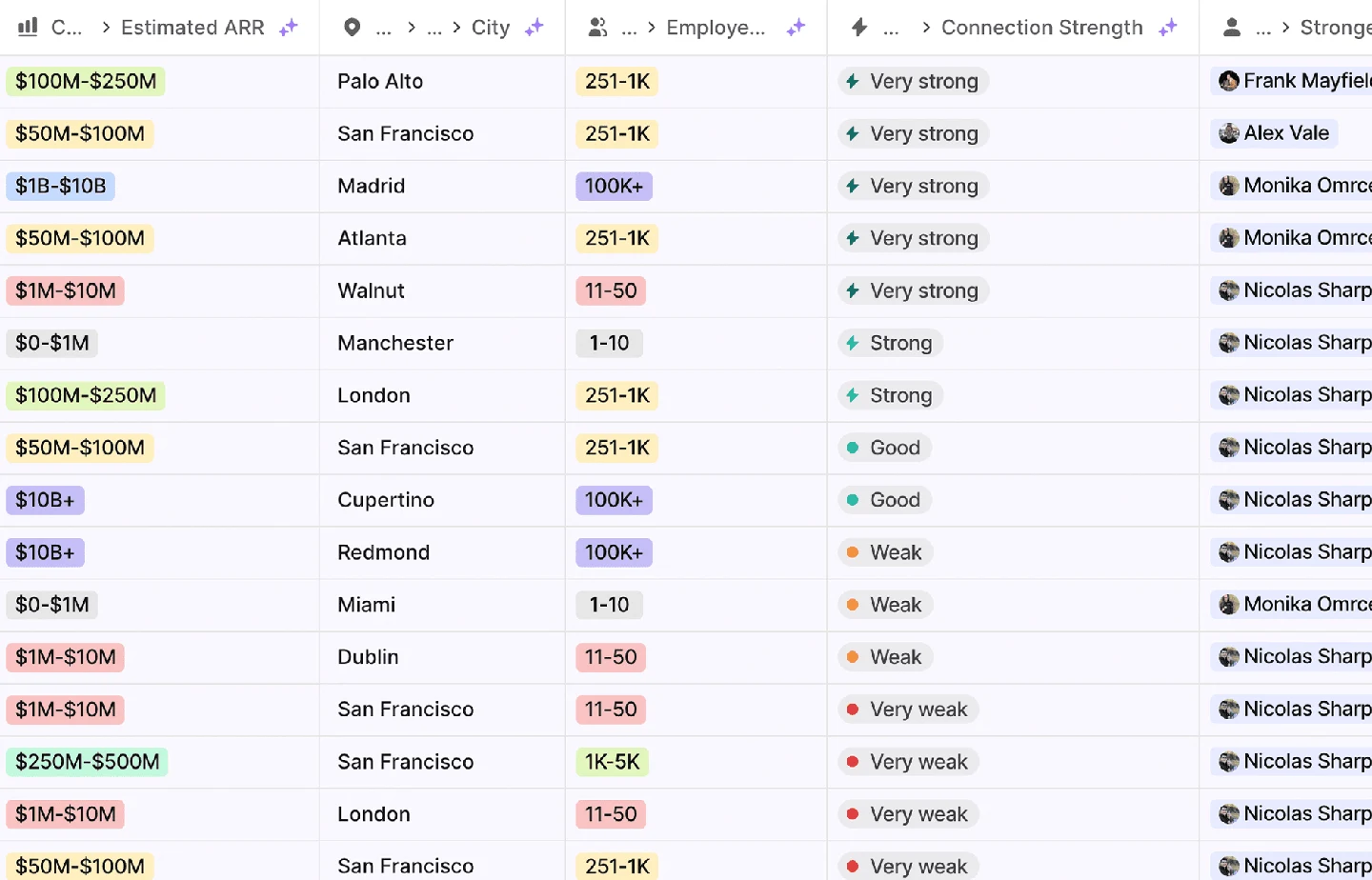
Attio keeps the configurability that Zoho buyers like, with a much lighter interface. You build objects and relationships yourself. Pricing in November 2026 was a workspace base plus users: Plus at $40 base and $35 per extra user a month annually, Pro at $100 base and $79 per user, with custom objects, sequences and call intelligence on Pro. It will cost more per head than Zoho for a team over a few people. Plans record.
Close
 ClosePublished capabilities
- Sales pipeline and contact records
- Calling
- Sales communications
Which phone, SMS and usage charges sit outside the subscription?
Check product scope ↗Close is the choice for a team whose day is calls. Calling, SMS and email sit in the CRM on every plan, minutes are billed at cost, and the power dialer starts on Growth at $99 a seat a month annually (Essentials was $35 in November 2026). Close does sales only, so it suits a team that doesn't need Zoho's wider modules.
Twenty
 TwentyPublished capabilities
- Open-source CRM foundation
- Modular customization
- Customer and sales records
Who will own production operations and which paid features are required?
Check product scope ↗Twenty is an open-source CRM. The core is free to self-host, and the cloud version listed Pro at $9 a user a month and Organization at $39 on yearly billing in November 2026, with custom roles, SSO and audit logs on Organization. It suits a team with engineers who want to own the code and the data. Self-hosting means you run backups and upgrades. See Twenty vs Attio.
| Tool | Price unit | Entry paid price, Nov 2026 (annual) | Best reason to pick it |
|---|---|---|---|
| Zoho CRM | Per user | $14 Standard | Lowest per-user price, Zoho suite |
| Pipedrive | Per seat plus add-ons | $14 Lite | Reps keep it current |
| HubSpot CRM | Per seat by hub | $20 Starter list | Marketing on the same record |
| Attio | Workspace base plus users | $40 base | Flexible objects, light interface |
| Close | Per seat, minutes at cost | $35 Essentials | Built-in calling |
| Twenty | Per user, or self-host | $9 Pro | Open source |
What moves when you leave Zoho
Zoho exports module data to CSV and offers a full backup. The records move; the logic doesn't.
- Blueprints and workflows. These are Zoho's process engine. Document each stage transition and rule before you cancel, then rebuild the important ones.
- Custom modules. Only Attio and Twenty have a natural home for them among these tools. In Pipedrive or HubSpot they become custom fields or associated records.
- Zoho app links. If Books, Desk or Campaigns read from the CRM, decide what feeds them after the move.
- Lookups and IDs. Keep Zoho record IDs in a field in the new system so you can trace records back during the overlap.
The CRM migration checklist has the full sequence.
Questions buyers ask
What is the best alternative to Zoho CRM?
Pipedrive for a simpler sales pipeline, HubSpot CRM if marketing needs to share the record. Attio if you liked Zoho's configurability and want it with a cleaner interface.
Is there a free alternative to Zoho CRM?
HubSpot's free CRM (2 users, 1,000 contacts) and Attio's free plan (3 users, 50,000 records) are the closest. Twenty's open-source core is free to self-host if you can run it.
Is Zoho CRM cheaper than HubSpot?
Per user, usually yes. Zoho Professional was $23 a user a month annually in November 2026, while HubSpot's paid cost grows with hubs and editions. HubSpot's free CRM costs nothing, though, and covers a small team.
Zoho CRM vs Pipedrive: which is easier?
Pipedrive. It is built around one pipeline view and the next activity on each deal. Zoho has more modules and settings, which helps an admin and slows down a rep.
Can I export everything from Zoho CRM?
Modules export to CSV, and Zoho offers a full data backup. Blueprints, workflows, Zia settings and custom functions don't move; they need rebuilding.