RevOps automation needs more than an application connection. Compare n8n, Make and Zapier with enterprise integration platforms such as Workato and Tray.ai and repository-based execution such as Cargo.
Your shortlist
Editorial selectionThese products cover different parts of this job. Use the fit and buying model to decide which belong in your evaluation; display order is not a performance ranking.

Engineers who want a visual workflow with code steps and a self-hosting option.
Read profile →Operators building connected scenarios in a visual builder.
Read profile →Teams prioritizing packaged app connections and straightforward workflow maintenance.
Professional · starting offer: $29.99/month · monthly billing
Vendor source ↗Pricing read 2026-11-12 · USDWorkato connects applications, data, workflows and AI agents on an enterprise platform. Its current site places governance and execution around the integration layer. Evaluate it when a GTM workflow is part of a wider enterprise automation program with shared access, security and operational requirements.
Read profile →Tray.ai is an integration and automation platform spanning data connections, workflows, agents and MCP. Its current site describes deploying and governing these components together. It is relevant when a technical operations team needs a shared execution layer across more than a few simple app connections.
Read profile →GTM engineers who want to keep TypeScript workflows in a repository while a service runs them.
Read profile →Maintain GTM context, messaging and agent workflows alongside the existing CRM and engagement stack.
Custom pricing; quote on request
Vendor source ↗Pricing read 2026-11-12 · Currency not specifiedActivate job changes and other signals through account/contact scoring and downstream workflows.
Core: $40,000/year · annual invoice
Vendor source ↗Pricing read 2026-11-12 · Currency not specifiedTrack existing customer and champion relationships as people change companies, with a Salesforce-centered operating model.
Champify Lite: from $500/month · confirm commitment
Vendor source ↗Pricing read 2026-11-12 · Currency not specifiedCollect and refresh prospecting inputs with scheduled automation, then hand approved outputs to the rest of the stack.
Start: $56/month · annual commitment
Vendor source ↗Pricing read 2026-11-12 · Currency not specifiedEvaluate account intelligence, intent, predictive scoring and activation as a coordinated revenue platform.
Custom pricing; quote on request
Vendor source ↗Pricing read 2026-11-12 · Currency not specifiedCombine account-based data, buying-group context and activation across the revenue team.
Custom pricing; quote on request
Vendor source ↗Pricing read 2026-11-12 · Currency not specifiedBuying notes
- ### Start from the system of record
- Executions, tasks, credits and contracted platform capacity are different units. Build the same complete workflow in the comparison and record successful paths, polling, branches and retries. Add connected-provider costs and the people who maintain the process.
- Pilot one meaningful CRM or routing operation with valid, duplicate and failing inputs. Have the intended administrator change a field mapping, rotate a test credential and recover a partial failure. Inspect the usage ledger and destination records, then document the rollback and ownership procedure.
- Choose the smallest product configuration that can run the complete workflow, with an owner able to inspect and recover it.
Start with the operating decision
RevOps automation needs more than an application connection. Compare n8n, Make and Zapier with enterprise integration platforms such as Workato and Tray.ai and repository-based execution such as Cargo. The main distinction is who can build, approve, observe and repair the process after it becomes part of the revenue operation.
Shortlist by product shape
| Tool | What to evaluate | Pricing coverage |
|---|---|---|
| n8n | Workflow automation | Dated plan record |
| Make | Visual workflow automation | Official pricing |
| Zapier | App workflow automation | Official pricing |
| Workato | workflow orchestration | Official pricing |
| Tray.ai | workflow orchestration | Official pricing |
| Cargo | Code-based GTM workflows | Official pricing |
The features that change the decision
Start from the system of record
Define which application owns each important field and event. A workflow should not bounce competing updates between systems or recreate records that were deliberately merged. Preserve stable identifiers and source context.
Match the builder to the maintainer
A visual scenario is useful when operators own changes. Code can fit a team with review, tests and version control. Enterprise platforms add governance and deployment decisions. Choose the operating model the future owner can maintain, rather than the one used in a polished demo.
Make partial failure visible
A workflow can complete some external writes and fail later. Record which operations succeeded and avoid blindly replaying everything. Paid data requests and CRM writes need different recovery considerations.
Inspect governance in the required edition
Credentials, environments, change approval and access to run data can affect the package. Confirm them directly instead of assuming that all advertised platform capabilities appear on an entry subscription.
n8n
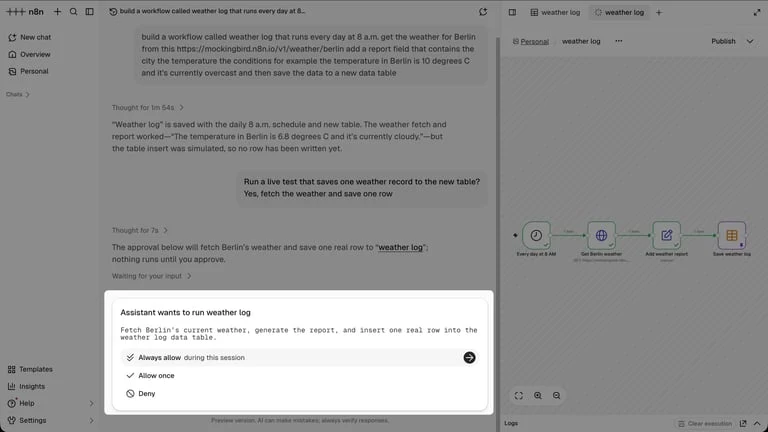
n8n is a workflow platform that combines a visual execution graph with code-capable steps. It can be used as a hosted service or operated on your own infrastructure. GTM use cases include incoming lead validation, enrichment, routing and CRM updates, with the workflow owner responsible for the behavior between connected systems.
Capabilities to compare:
- Visual workflow editor
- Code steps
- API and application connections
- AI-agent workflows
- Cloud and self-hosted editions
Tradeoff: Cloud execution billing and self-hosted operating cost require different budgets. The Community edition does not include every paid-edition feature, and self-hosting still requires backups, upgrades and monitoring. Check the license and edition for the intended use.
In an evaluation: Build a lead-intake flow with validation, a durable deduplication check and a CRM write. Deliberately fail the external API step, inspect the run and recover it without creating a duplicate record or paying twice for a completed lookup.
See the plans and billing record.
Make
 Make
Count branches and actions across a complete scenario.
Make uses a visual scenario builder to connect applications and automate work. Its current product site includes AI agents, custom code, observability and MCP-related capabilities. For a GTM operator, the important question is whether the person maintaining a scenario can follow each record through branches, external calls and error handling.
Capabilities to compare:
- Visual workflow builder
- Application connections
- Branching scenarios
- Custom code
- Automation observability and AI workflows
Tradeoff: Credits consumed across modules and branches need to be calculated for a complete record. A nominal task on another platform may not be the same billing unit. Consider how polling and retries affect both cost and maintenance.
In an evaluation: Model a real enrichment or routing scenario, record the steps on successful and failed paths, and have the future owner repair one error. Verify that an output is written exactly once and that a retry has a clear cost.
Review the official product and pricing sources for the current package.
Zapier
 Zapier
Count the successful tasks in the full automation.
Zapier is a managed automation platform connecting applications, workflows and AI-agent capabilities. Its current pricing groups Zaps with Tables and Forms, so the buying comparison should identify both the workflow actions and the supporting data or intake features the team needs.
Capabilities to compare:
- Application-connected automations
- Multi-step workflows
- Tables
- Forms
- AI-agent and governance capabilities
Tradeoff: Several successful actions can consume several tasks for one input record. Confirm task-count rules, the required apps, collaboration features and overage handling on the selected tier. A large integration catalog does not prove support for every action your flow needs.
In an evaluation: Connect the exact applications and operations in the intended process. Trigger a real test event, inspect the tasks charged and test an error or duplicate. Confirm that an operator can update credentials and maintain the automation.
Review the official product and pricing sources for the current package.
Workato
 WorkatoPublished capabilities
- Application integration
- Workflow orchestration
- Data movement
Which features and usage are included in your exact plan?
Check product scope ↗Workato connects applications, data, workflows and AI agents on an enterprise platform. Its current site places governance and execution around the integration layer. Evaluate it when a GTM workflow is part of a wider enterprise automation program with shared access, security and operational requirements.
Capabilities to compare:
- Application integration
- Workflow orchestration
- Data movement
- AI-agent orchestration
- Enterprise governance
Tradeoff: A broad integration platform can involve implementation and operating responsibilities beyond a single sales automation. Confirm the licensed capacity, connectors, environments and governance controls. Include administration and deployment processes in the comparison.
In an evaluation: Build one representative CRM or enrichment integration and run successful, failed and duplicate events. Review credential access, deployment approval and the run history with the team that will maintain it in production.
Review the official product and pricing sources for the current package.
Tray.ai
- Application and API integration
- Workflow automation
- Agent building
Which features and usage are included in your exact plan?
Check product scope ↗Tray.ai is an integration and automation platform spanning data connections, workflows, agents and MCP. Its current site describes deploying and governing these components together. It is relevant when a technical operations team needs a shared execution layer across more than a few simple app connections.
Capabilities to compare:
- Application and API integration
- Workflow automation
- Agent building
- MCP governance
- Managed execution and deployment
Tradeoff: Compare the exact integration, deployment and governance requirements before treating the platform as equivalent to a lightweight no-code tool. Confirm usage metrics, required environments and who owns maintenance of custom API work.
In an evaluation: Implement a real CRM update flow with an external API dependency. Inspect the deployment process, runtime logs and error handling, then test a version change and a revoked credential in a non-production environment.
Review the official product and pricing sources for the current package.
Cargo
 CargoPublished capabilities
- Repository-owned TypeScript workflows
- Production execution
- Retries
Which runtime limits, retries and provider costs are included?
Check product scope ↗Cargo is infrastructure for GTM workflows written in TypeScript and maintained in a repository. Its current positioning emphasizes work created through a coding agent while Cargo handles production execution. It is a different operating model from a spreadsheet workspace or a purely visual no-code scenario.
Capabilities to compare:
- Repository-owned TypeScript workflows
- Production execution
- Retries
- Rate-limit handling
- Run logs
Tradeoff: Your team still owns the business logic and the permissions of connected services. Confirm runtime limits, secret management and provider billing. A managed runtime reduces some operational work but does not remove the need to inspect code and outputs.
In an evaluation: Take one existing enrichment or CRM operation, put the logic under version control and run it against test records. Inspect a rate-limit response and a retry, compare logs with external usage and roll back a small change.
Review the official product and pricing sources for the current package.
Compare the complete cost
Executions, tasks, credits and contracted platform capacity are different units. Build the same complete workflow in the comparison and record successful paths, polling, branches and retries. Add connected-provider costs and the people who maintain the process.
Self-hosting moves some expenses into infrastructure and operations. A repository-based runtime moves business logic into code that still requires review and an owner. Include those responsibilities rather than treating them as zero-cost alternatives.
Run an evaluation your team can use
Pilot one meaningful CRM or routing operation with valid, duplicate and failing inputs. Have the intended administrator change a field mapping, rotate a test credential and recover a partial failure. Inspect the usage ledger and destination records, then document the rollback and ownership procedure.
How this shortlist was assembled
The products cover different operating models within this category. We compared their documented scope, commercial model and implementation responsibilities. The recommendations are editorial judgments about fit. No performance benchmark or independent accuracy ranking is claimed. Official sources are linked beside product facts and collected below.
Questions buyers ask
Which platform is cheapest?
There is no common unit price. Compare the complete workflow, required edition, connected costs and maintenance on the same workload.
Code or visual workflow?
Choose the model the future owner can inspect and maintain. Both require error handling and clear record ownership.
What makes a workflow recoverable?
Stable event IDs, visible step results, bounded retries and idempotent downstream operations.
Does self-hosting remove cost?
No. It changes the budget to include infrastructure, upgrades, backups, security and operating time.
Which governance features matter?
Check credentials, environments, change approval, access to run data and recovery responsibilities on the selected edition.
What should the pilot prove?
That the team can complete the operation, validate the destination, understand cost and recover a failure without duplicating work.