Make and Zapier are candidates when managed integration workflows are the main requirement. Clay and Cargo are relevant to GTM data operations with a different product scope.
Buying notes
- Make and Zapier are candidates when managed integration workflows are the main requirement. Clay and Cargo are relevant to GTM data operations with a different product scope. Compare hosting responsibility, custom logic, recovery and actual execution costs before moving an n8n workflow.
- Compare the same input records, required features and accepted-output rule.
- Preserve source dates, billing periods and the surrounding subscriptions in the cost comparison.
Replacement scope
Make and Zapier are candidates when managed integration workflows are the main requirement. Clay and Cargo are relevant to GTM data operations with a different product scope. Compare hosting responsibility, custom logic, recovery and actual execution costs before moving an n8n workflow.
| Product | Working scope | Pricing record |
|---|---|---|
| n8n | Workflow automation | Plans |
| Make | Visual workflow automation | Vendor offer |
| Zapier | App workflow automation | Vendor offer |
| Clay | Enrichment orchestration | Plans |
| Cargo | Code-based GTM workflows | Vendor offer |
n8n: where it fits
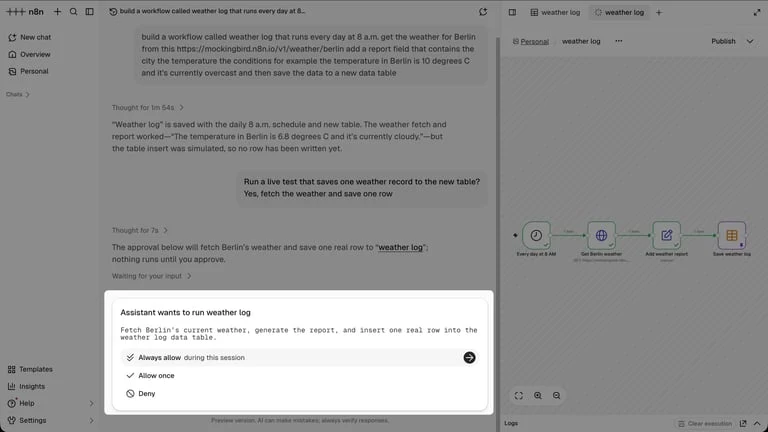
n8n is a workflow platform that combines a visual execution graph with code-capable steps. It can be used as a hosted service or operated on your own infrastructure. GTM use cases include incoming lead validation, enrichment, routing and CRM updates, with the workflow owner responsible for the behavior between connected systems.
Capabilities to compare:
- Visual workflow editor
- Code steps
- API and application connections
- AI-agent workflows
- Cloud and self-hosted editions
Tradeoff: Cloud execution billing and self-hosted operating cost require different budgets. The Community edition does not include every paid-edition feature, and self-hosting still requires backups, upgrades and monitoring. Check the license and edition for the intended use.
In an evaluation: Build a lead-intake flow with validation, a durable deduplication check and a CRM write. Deliberately fail the external API step, inspect the run and recover it without creating a duplicate record or paying twice for a completed lookup.
The pricing record separates billing periods, allowances and source dates. Use that configuration in the cost comparison rather than combining a monthly seat price with a different product’s annual rate.
Make: where it fits
 Make
Count branches and actions across a complete scenario.
Make uses a visual scenario builder to connect applications and automate work. Its current product site includes AI agents, custom code, observability and MCP-related capabilities. For a GTM operator, the important question is whether the person maintaining a scenario can follow each record through branches, external calls and error handling.
Capabilities to compare:
- Visual workflow builder
- Application connections
- Branching scenarios
- Custom code
- Automation observability and AI workflows
Tradeoff: Credits consumed across modules and branches need to be calculated for a complete record. A nominal task on another platform may not be the same billing unit. Consider how polling and retries affect both cost and maintenance.
In an evaluation: Model a real enrichment or routing scenario, record the steps on successful and failed paths, and have the future owner repair one error. Verify that an output is written exactly once and that a retry has a clear cost.
Zapier: where it fits
 Zapier
Count the successful tasks in the full automation.
Zapier is a managed automation platform connecting applications, workflows and AI-agent capabilities. Its current pricing groups Zaps with Tables and Forms, so the buying comparison should identify both the workflow actions and the supporting data or intake features the team needs.
Capabilities to compare:
- Application-connected automations
- Multi-step workflows
- Tables
- Forms
- AI-agent and governance capabilities
Tradeoff: Several successful actions can consume several tasks for one input record. Confirm task-count rules, the required apps, collaboration features and overage handling on the selected tier. A large integration catalog does not prove support for every action your flow needs.
In an evaluation: Connect the exact applications and operations in the intended process. Trigger a real test event, inspect the tasks charged and test an error or duplicate. Confirm that an operator can update credentials and maintain the automation.
Clay: where it fits
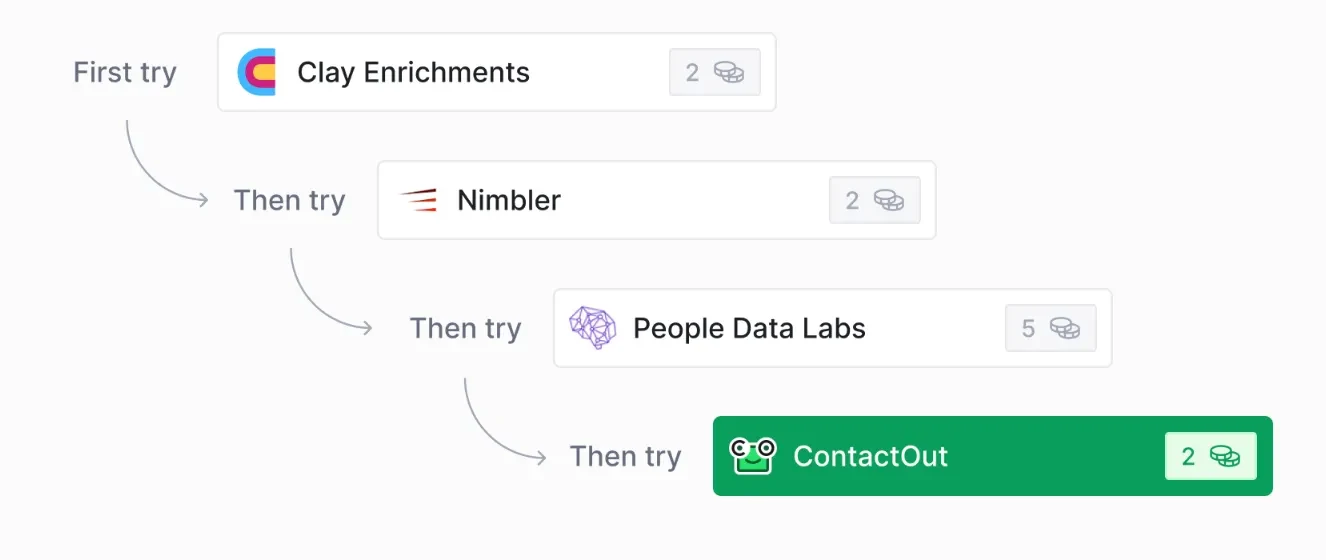
Clay is an orchestration and data workspace for GTM teams. It combines access to data providers with research and workflow execution. The central operating decision is how a record moves through the table or workflow: which provider runs, what happens on a miss and what is written to the destination system.
Capabilities to compare:
- Data-provider marketplace
- Enrichment workflows
- AI-assisted research
- Visual GTM workflow building
- Bring-your-own provider keys
Tradeoff: Clay actions and data credits are separate cost drivers. Bringing a provider key can move the data charge to that supplier while retaining Clay action consumption. A full record can invoke multiple steps, so calculate costs from the actual workflow.
In an evaluation: Build a small enrichment flow with a known input list, an acceptance rule and a fallback provider. Record the action count, data credits and external charges, then test a timeout and a replay before increasing volume.
The pricing record separates billing periods, allowances and source dates. Use that configuration in the cost comparison rather than combining a monthly seat price with a different product’s annual rate.
Cargo: where it fits
 CargoPublished capabilities
- Repository-owned TypeScript workflows
- Production execution
- Retries
Which runtime limits, retries and provider costs are included?
Check product scope ↗Cargo is infrastructure for GTM workflows written in TypeScript and maintained in a repository. Its current positioning emphasizes work created through a coding agent while Cargo handles production execution. It is a different operating model from a spreadsheet workspace or a purely visual no-code scenario.
Capabilities to compare:
- Repository-owned TypeScript workflows
- Production execution
- Retries
- Rate-limit handling
- Run logs
Tradeoff: Your team still owns the business logic and the permissions of connected services. Confirm runtime limits, secret management and provider billing. A managed runtime reduces some operational work but does not remove the need to inspect code and outputs.
In an evaluation: Take one existing enrichment or CRM operation, put the logic under version control and run it against test records. Inspect a rate-limit response and a retry, compare logs with external usage and roll back a small change.
Run the same workload
Write down the input, required output and acceptance rule before opening either product. Use the same records, audience, channels and destination. If the products cover different parts of the process, include the missing component in the evaluation rather than assuming that one product replaces the entire stack.
Follow the output all the way to the person using it. A data response is useful when it passes the acceptance rule and reaches the right record; a booked meeting is useful when ownership and qualification are correct. Keep operational failures separate from a failure to match or produce a result.
What the cost comparison should include
- The configuration and billing period required for the actual users.
- Data and usage charged by both the platform and connected providers.
- Communications, mailboxes or infrastructure purchased elsewhere.
- Implementation, migration and ongoing administration.
- Export rights, renewal terms and the cost of switching again.
Plan the handoff or migration
Export a representative sample before committing to a switch. Map stable identifiers and field ownership, preserve the source and date of enriched data and check which configuration can be reproduced. Run a bounded parallel test before decommissioning a working integration. Confirm that an account owner can inspect failures and recover a record without repeating a paid operation or creating duplicates.
Questions buyers ask
Which option should we choose?
Make and Zapier are candidates when managed integration workflows are the main requirement. Clay and Cargo are relevant to GTM data operations with a different product scope. Compare hosting responsibility, custom logic, recovery and actual execution costs before moving an n8n workflow.
Can these products replace one another?
Only where their working scopes overlap. Identify the exact data, execution or operating job being moved and include any additional tool needed to complete the process.
How should we compare the price?
Use the same workload and commitment period, including required users, usage and connected services. Quoted offers and dated public rates should remain distinguishable.
What should a pilot prove?
That the intended users can complete the workflow, inspect its outputs, repair a failure and understand the resulting cost. It does not need to claim a universal product winner.